
Key Takeaways
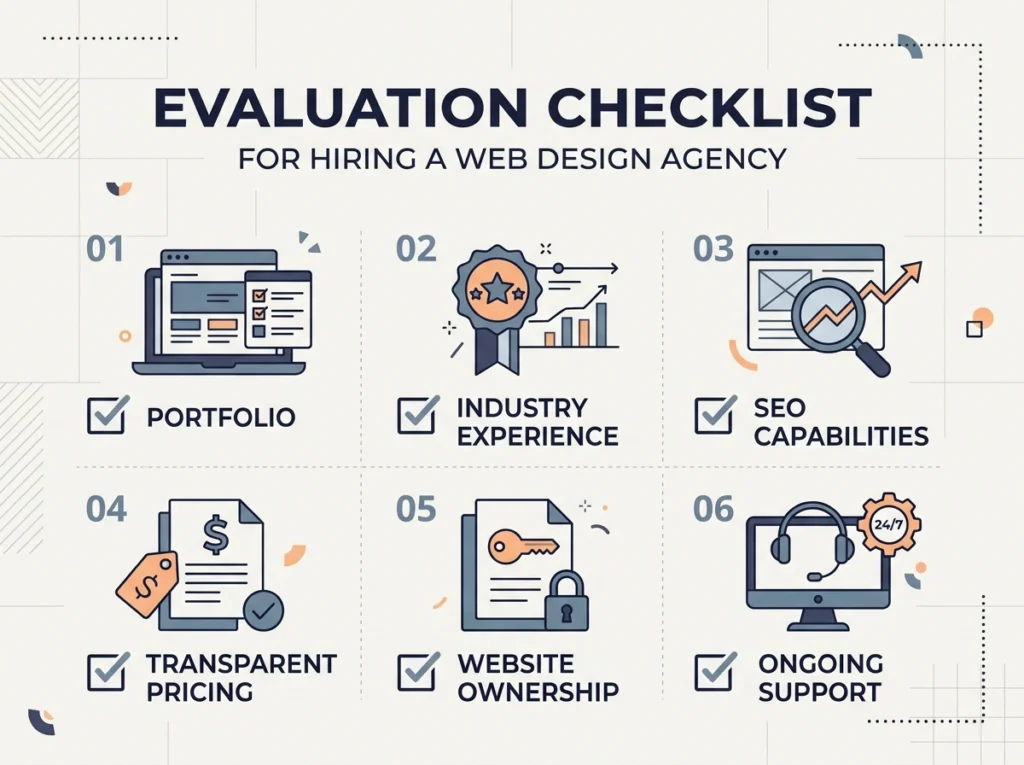
- Define your website goals, target audience, and functional requirements before contacting agencies.
- Review real portfolios and case studies instead of judging agencies only by design mockups.
- Choose an agency with experience in your industry and target markets.
- Evaluate both visual design and technical development capabilities.
- Make sure SEO, mobile responsiveness, website speed, and conversion optimization are considered from the beginning.
- Understand the pricing structure, project timeline, website ownership, and ongoing support.
- Choose a long-term website partner rather than simply the cheapest service provider.
Why Choosing the Right Web Design Agency Matters
Your website is often the first place potential customers go to learn about your company. It influences how they perceive your brand, evaluate your products, and decide whether to contact your sales team.
A professional web design agency should understand how design, technology, and marketing work together. It should not simply create attractive pages but also build a website that supports your business objectives.
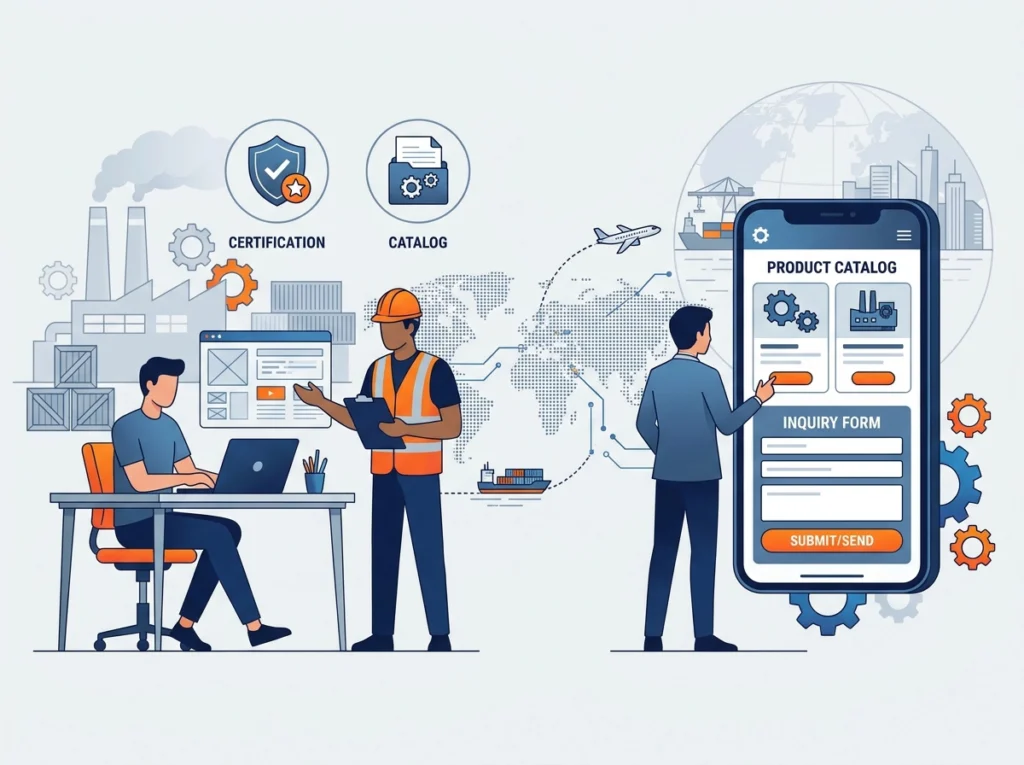
For example, a B2B manufacturer targeting overseas buyers may need:
- A clear company profile and manufacturing capability presentation.
- Well-organized product categories and detailed product pages.
- Technical specifications, certifications, and downloadable catalogs.
- Inquiry forms and direct communication options such as WhatsApp.
- SEO-friendly website architecture and content structure.
- Integration with analytics and advertising conversion tracking.
Choosing an agency that understands these requirements can reduce unnecessary redesigns and help your website become a more effective business development tool.
Define Your Website Goals and Requirements
Before contacting a web design agency, identify what you expect your new website to achieve. Clear requirements make it easier to compare proposals and determine whether an agency is suitable for your project.
Identify Your Primary Business Goals
Different businesses need different website solutions. Your goals may include:
- Brand building: Establish a professional image and communicate your company’s strengths.
- Lead generation: Attract potential buyers and encourage them to submit inquiries.
- Product presentation: Showcase product specifications, applications, and customization options.
- International expansion: Reach customers in different countries and language markets.
- Digital marketing: Support Google SEO, Google Ads, and AI search visibility.
- Online sales: Provide product browsing, shopping cart, payment, and order management functionality.
Prepare Your Functional Requirements
List the features your website needs before requesting a quotation. These may include multilingual functionality, product catalogs, inquiry forms, CRM integration, live chat, WhatsApp, downloadable resources, or eCommerce capabilities.
You should also consider the number of pages, existing content, product data, and whether the project involves a new website or a migration from an existing platform.
The more clearly you communicate your requirements, the more accurate the agency’s proposal and cost estimate are likely to be.
Review the Agency’s Portfolio and Case Studies
A portfolio provides useful evidence of an agency’s design experience and development capabilities. However, do not evaluate an agency based only on how attractive its homepage screenshots look.
Look for Real, Published Websites
Visit the actual websites included in the agency’s portfolio. Review their navigation, mobile layouts, loading performance, content structure, and overall user experience.
Check whether the websites are functional and consistent across different devices. A visually impressive design mockup does not necessarily demonstrate the ability to deliver a reliable website.
Evaluate Relevant Case Studies
Look for projects that have similarities to your own business. For example, if you operate a manufacturing company, an agency with experience building B2B corporate websites may better understand product catalogs, technical information, and inquiry generation.
Useful case study details include:
- The client’s industry and target audience.
- The original website challenges.
- The design and development solutions implemented.
- Important functionality and technical features.
- Measurable results, when reliable data is available.
Be cautious of agencies that present impressive traffic or conversion figures without explaining the measurement period, traffic sources, or tracking methods.
Check Their Industry Experience
Industry experience can make a significant difference in website planning and content presentation.
An agency that understands your business model is more likely to identify the information your potential customers need before making a purchasing decision.
Experience With B2B and Manufacturing Websites
B2B websites often have different requirements from consumer-focused websites. Buyers may need detailed specifications, production capabilities, quality certifications, customization options, and information about minimum order quantities.
A suitable agency should understand how to organize this information so visitors can evaluate your products and business efficiently.
Understanding International Markets
If you target overseas customers, your agency should understand international website requirements, including:
- Professional English content and market-specific messaging.
- Multilingual website architecture where needed.
- International SEO and regional keyword research.
- Mobile usability across different devices and networks.
- Trust signals that overseas buyers expect from suppliers.
An agency with relevant international business experience can help you avoid building a website that looks professional but does not address the concerns of your target buyers.
Evaluate Their Design and Development Capabilities
Website design and website development are related but different disciplines. A strong agency should be able to deliver both a consistent visual experience and a technically reliable website.
Visual Design and User Experience
Evaluate whether the agency can create a visual identity that reflects your brand and industry positioning.
Important considerations include:
- Brand colors, typography, and visual consistency.
- Clear navigation and logical page layouts.
- Readable content hierarchy and product presentation.
- Responsive layouts for desktop, tablet, and mobile.
- Clear calls to action and accessible contact options.
Website Development and Platform Expertise
Ask which platforms the agency uses and why. Common options include WordPress, Shopify, and custom development.
For many B2B corporate websites, WordPress offers flexible content management, extensive customization options, and support for SEO-focused content strategies.
Before choosing a platform, consider:
- Whether you can manage website content independently.
- Whether the platform supports your required functionality.
- Whether the website can be expanded in the future.
- Whether you can access the source code and website files.
- Whether hosting and maintenance costs are transparent.
Performance and Technical SEO
A professional website should be built with technical performance in mind. Ask whether the agency considers:
- Core Web Vitals and page loading performance.
- Mobile responsiveness and accessibility.
- Clean URL structures and heading hierarchy.
- XML sitemaps, robots.txt, and indexing settings.
- SSL certificates and website security.
- Structured data and internal linking.
These technical foundations help make your website easier to use, maintain, and optimize for search engines.
Understand Their SEO and Digital Marketing Knowledge
A website should not be treated as an isolated design project. If your business depends on online customer acquisition, your website needs to support the marketing channels you plan to use.
SEO-Friendly Website Architecture
Ask whether the agency considers keyword research and search intent when planning the website structure.
For example, a B2B manufacturer may need separate pages for its main product categories, individual products, applications, and industry solutions. Each page should have a clear purpose and target relevant search queries.
Conversion-Focused Website Design
Attracting visitors is only part of the job. Your website should also make it easy for potential customers to take the next step.
Look for practical conversion elements such as:
- Visible inquiry buttons and contact information.
- Simple quotation request forms.
- Relevant product and service landing pages.
- Customer cases, certifications, and company credentials.
- WhatsApp or other direct communication options.
- Clear next steps throughout the customer journey.
Google Ads and AI Search Readiness
If you plan to run Google Ads, the agency should understand landing page relevance, conversion tracking, and the relationship between advertising messages and page content.
Businesses increasingly want their websites to be discoverable through AI-powered search experiences as well. Clear question-and-answer content, accurate company information, structured data, and credible external references can support AI search visibility.
Be cautious of providers that promise guaranteed Google rankings or guaranteed AI recommendations. A responsible agency should explain its optimization methods, measurement approach, and limitations.
Ask About Their Website Development Process
A clear development process helps prevent misunderstandings, delays, and unexpected costs.
Ask the agency to explain how it manages each stage of the project.
Typical Website Development Stages
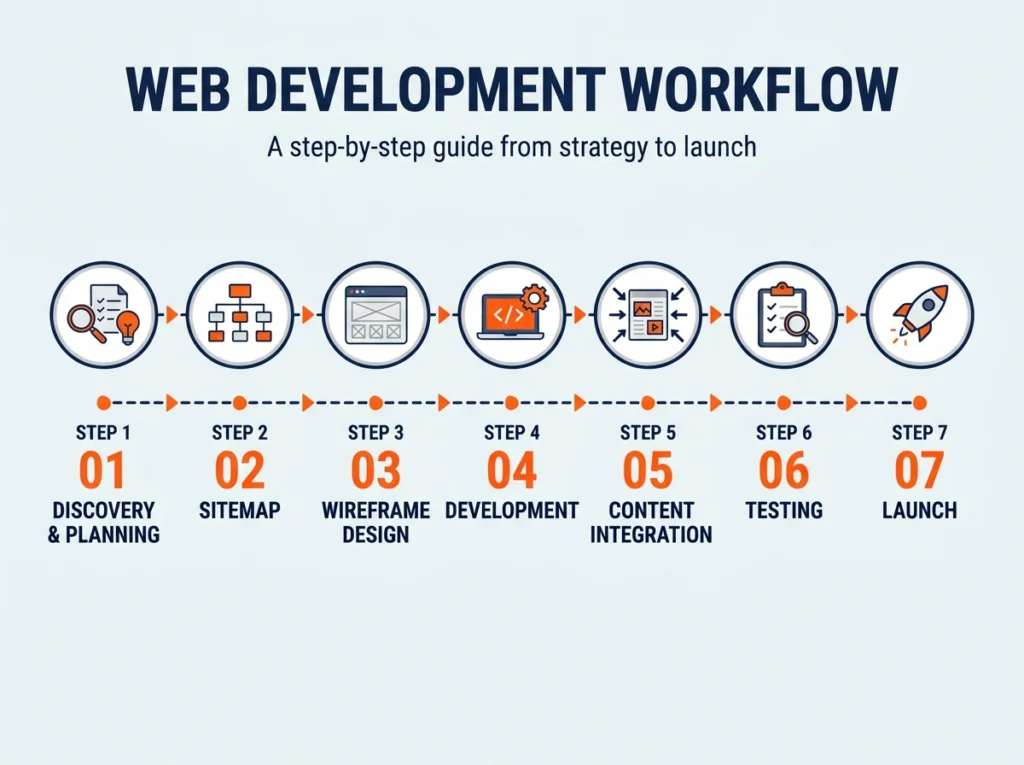
- Discovery and Planning: Understand your business, target audience, competitors, goals, and technical requirements.
- Website Structure: Create the sitemap, navigation plan, and page hierarchy.
- Wireframing and Design: Develop page layouts, visual concepts, and responsive design guidelines.
- Development: Build the website, configure the content management system, and implement required features.
- Content Integration: Add text, images, product information, and other website assets.
- Testing and Optimization: Check functionality, mobile layouts, performance, forms, and technical SEO.
- Launch and Handover: Publish the website, provide access credentials, and explain how to manage it.
Also clarify who is responsible for providing content, images, translations, and technical information. These responsibilities can significantly affect the project timeline.
Understand Communication and Project Management
Ask who your main contact will be, how often you will receive updates, and how revisions are handled.
Make sure the proposal defines the number of design revisions, approval stages, delivery milestones, and procedures for handling additional requests.
Compare Pricing and Service Packages
Website development prices vary according to project complexity, design requirements, number of pages, functionality, content production, and technical integrations.
When comparing proposals, do not focus only on the final quotation. Understand exactly what each agency includes in its service.
What Should a Website Development Quote Include?
- Website planning and sitemap development.
- UI/UX design and responsive page layouts.
- Website development and platform configuration.
- Number of included pages and content uploads.
- Basic SEO setup and technical configuration.
- Forms, chat tools, and third-party integrations.
- Testing, launch, and handover.
- Training, maintenance, and post-launch support.
Look Beyond the Initial Development Cost
Some costs may not be included in the initial quotation, such as domain registration, hosting, premium plugins, multilingual tools, ongoing maintenance, and content updates.
Ask for a clear breakdown of one-time and recurring costs. This will help you compare the total cost of ownership rather than just the initial development fee.
The cheapest proposal is not necessarily the most cost-effective choice. Consider the quality of delivery, technical flexibility, ownership terms, and support available after launch.
Clarify Website Ownership and Ongoing Support
Website ownership is an important issue that should be discussed before signing an agreement.
Your business should understand who controls the domain, hosting account, website files, database, source code, and administrator access.
Confirm Website Ownership
Before hiring an agency, clarify the following:
- Will the domain be registered under your company’s account?
- Will you have access to the hosting account?
- Can you access the website’s source code and database?
- Will you receive full administrator access?
- Can you move the website to another hosting provider?
- Are there additional fees for transferring or exporting website data?
For WordPress projects, confirm that you can access your website files, database, and administrator dashboard. These details are important for long-term flexibility.
Ask About Maintenance and Technical Support
Websites require ongoing maintenance after launch. Ask whether the agency offers support for:
- WordPress, theme, and plugin updates.
- Website backups and recovery.
- Security monitoring and troubleshooting.
- Broken links and technical errors.
- Content updates and new page development.
- Performance and SEO improvements.
Understand what is included in the maintenance agreement and how additional work is charged.
Watch Out for Common Red Flags
Not every web design agency is suitable for every business. During the selection process, pay attention to warning signs that may indicate a mismatch or potential project risk.
Unrealistic Promises
Be cautious of agencies that guarantee first-page Google rankings, immediate lead generation, or guaranteed AI search recommendations. Website performance depends on many factors, including competition, content quality, market demand, and ongoing optimization.
Unclear Pricing and Hidden Fees
If a proposal does not explain deliverables, recurring charges, revision limits, or third-party costs, request clarification before making a decision.
No Verifiable Portfolio
Agencies that cannot provide published websites or relevant project examples may not have enough evidence to demonstrate their capabilities.
Limited Website Access and Ownership
A provider that refuses to clarify website ownership, restricts administrator access, or makes migration difficult may create unnecessary long-term dependency.
Design Without a Business Strategy
If the agency focuses entirely on colors, animations, and visual effects without discussing your target customers, website structure, SEO, or conversion goals, it may not be considering the full purpose of your website.
Questions to Ask Before Hiring a Web Design Agency
Before signing a contract, ask questions that help you evaluate the agency’s experience, process, pricing, and long-term support.
About Experience
- Have you built websites for businesses in our industry?
- Can you share relevant website projects and case studies?
- Do you understand international B2B markets and overseas buyers?
About Design and Development
- Which website platform do you recommend for our business, and why?
- Will the website be custom-designed or based on a template?
- Will the website be responsive and optimized for mobile devices?
- What technical SEO features are included?
About Pricing and Project Management
- What exactly is included in the quotation?
- How long will the project take?
- How many design revisions are included?
- Who will be responsible for content and images?
- How are additional requests and changes charged?
About Ownership and Support
- Will we own the website and have full administrator access?
- Can we access and transfer the website files and database?
- What maintenance and support options are available?
- Are hosting, domain, and plugin costs included?
Compare the answers from several agencies rather than making a decision based on a single sales presentation.
Choose a Website Partner That Supports Your Growth
Choosing a web design agency requires more than comparing portfolios and quotations. You need a partner that understands your business, can deliver a technically sound website, and considers how the website will support your marketing and sales activities.
For B2B manufacturers, exporters, and international businesses, the right website should communicate product value, establish trust with overseas buyers, attract relevant search traffic, and turn visitors into qualified inquiries.
At Orangeeweb, we help B2B businesses build professional WordPress websites for international markets. Our services cover website planning, visual design, WordPress development, SEO foundations, and conversion-focused optimization.
Looking for a web design agency for your B2B business?
Explore our WordPress Website Development Services or contact Orangeeweb to discuss your website project.
Frequently Asked Questions
How do I choose a good web design agency?
Start by defining your business goals and website requirements. Then review the agency’s portfolio, industry experience, technical capabilities, SEO knowledge, pricing, project process, and website ownership terms. Choose a provider that can meet both your immediate requirements and long-term business needs.
How much does it cost to hire a web design agency?
The cost depends on the website’s size, design complexity, functionality, content requirements, and development platform. Ask for an itemized proposal covering design, development, integrations, SEO setup, testing, and ongoing maintenance so you can compare the total project cost.
Should I choose a local or international web design agency?
The best choice depends on your communication preferences, target market, project requirements, and budget. A local agency may offer easier in-person communication, while an international agency may provide relevant experience in overseas markets or specialized technical services. Evaluate actual project experience and communication quality rather than location alone.
Is WordPress a good choice for a B2B business website?
WordPress is a practical option for many B2B businesses because it supports flexible page structures, product catalogs, content marketing, SEO, and third-party integrations. It also allows businesses to manage website content without relying on developers for every update.
What is the difference between a web design agency and a web development company?
A web design agency generally focuses on visual design, user experience, and interface layouts. A web development company focuses more on technical implementation and website functionality. Many providers offer both services, so confirm which responsibilities are included in the project.
Should a web design agency provide SEO services?
At a minimum, your agency should understand SEO-friendly website architecture, responsive design, page speed, metadata, internal linking, and indexing configuration. If organic traffic is a major business goal, consider working with a provider that can also support ongoing SEO strategy and content optimization.
Who should own the website after development?
Your business should have clear ownership and administrative control over its website assets. Confirm access to the domain, hosting account, website files, database, and administrator dashboard before the project begins. Review the contract to understand any licensing or third-party restrictions.
How long does it take a web design agency to build a website?
The timeline depends on the number of pages, design requirements, functionality, content readiness, and revision process. A standard corporate website may take several weeks, while a larger multilingual or customized website can require more time.