
A Complete Cost-Benefit Breakdown
By orangeeweb.com | Updated: March 2026
Every so often, the cross-border trade community erupts with the same debate: “Independent websites are dying.” Some point to declining platform traffic and rising operational costs. Others complain that a single Google algorithm update can wipe out months of SEO work. And plenty of sellers have poured tens of thousands into a custom website only to receive zero inquiries.
So in 2026, is building your own independent website for cross-border trade still relevant?
This article breaks down the answer from three angles: data, cost, and real-world results. The short answer: Yes, it still works — but only if you do it right.
1. The Data Does Not Lie: Platform Dependency Is High-Risk

Many cross-border sellers instinctively resist the idea of an independent website — platforms feel familiar and safe. But the numbers tell a different story:
- Platform commission costs keep climbing: Traditional B2B platforms charge 8%–15% in commissions, top-seller accounts dominate the traffic, and fewer than 10% of inquiries typically convert to real leads.
- Trade show ROI is falling: A single offline exhibition can cost over $15,000 USD, yet only reaches a few dozen potential buyers — making cost-per-lead unsustainably high.
- Acquiring new overseas clients is harder than ever: The 2025 China Cross-Border Trade Digitalization White Paper found that 63% of export businesses struggle to find new overseas clients, and 41% cannot expand into emerging markets due to a lack of buyer connections.
💡 In short, doubling down on a single platform is becoming increasingly risky. An independent website is the foundation of a self-owned acquisition channel — one that no platform can take away from you.
2. The Real Value of an Independent Website: What You Actually Own

The biggest advantage of an independent website is not cost savings — it is ownership. Put simply: Your domain, your leads, your data. No one can take that away.
✅ Data Ownership: Understand Your Buyers Like Never Before
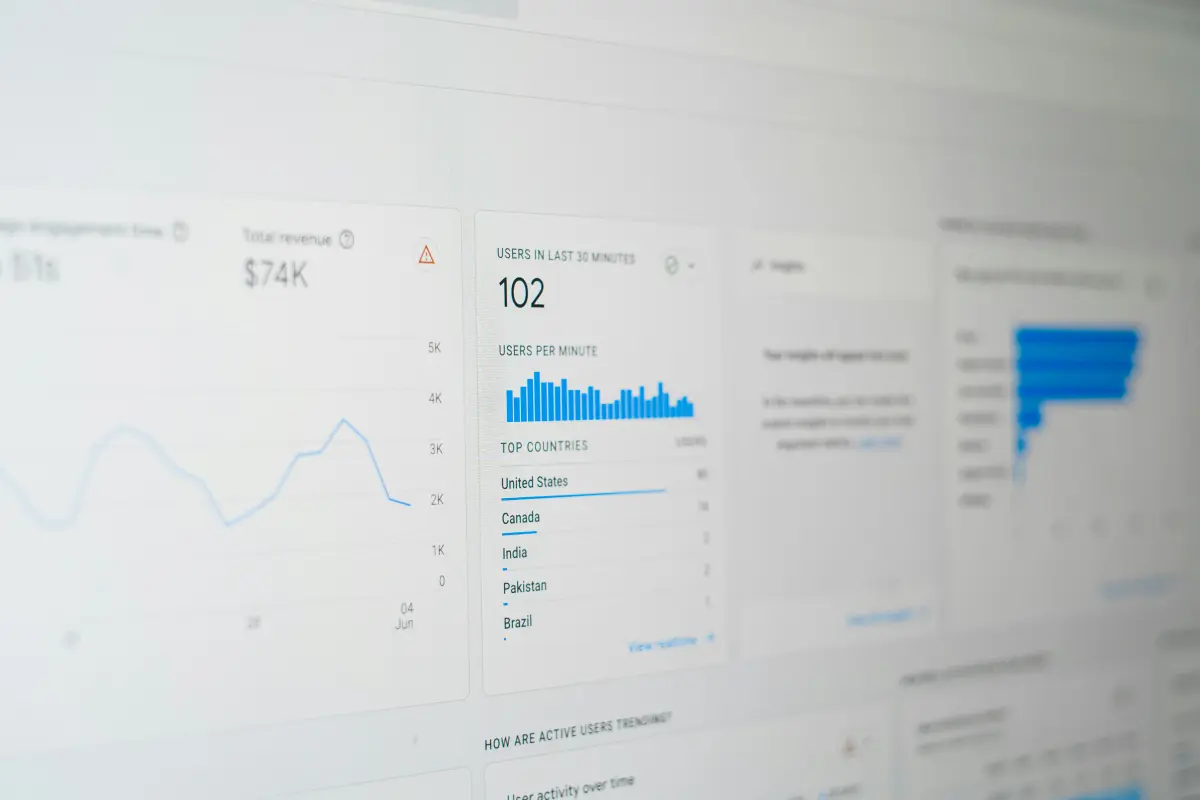
Platforms deliberately hide customer behavior data — you never know what specs a buyer was browsing, or which competitor pages they visited before contacting you. An independent website, paired with tools like Google Analytics 4 and Hotjar, lets you track full visitor journeys, search keywords, time on page, and even pinpoint patterns like “buyers from Germany prefer customization” or “the pricing page has a high drop-off rate.”
💡 One hardware manufacturer used independent website data to refine their product recommendation logic — and increased their annual repeat purchase rate from 15% to 32%, far outperforming their old platform-based approach.
✅ Brand Differentiation: Make Buyers Remember You
Every store on a B2B platform looks the same. A buyer browsing ten suppliers will struggle to tell them apart. But an independent website gives you full control — from domain name and design to copywriting and tone. B2B buyers respond to ISO certifications and case studies; B2C buyers respond to use-case photos and reviews. Your website can be built to speak directly to your target audience.
✅ SEO as a Long-Term Asset: Traffic That Compounds Over Time
Google SEO is fundamentally a long-term asset. A product page or article that ranks well can generate free traffic for years. Unlike paid ads that stop the moment you stop paying, SEO is more like a snowball — it keeps growing as you add content and build authority.
✅ Escape the Price War: Compete on Value, Not Price
More and more export businesses are investing in independent websites precisely because platform competition has become a race to the bottom. A well-built independent site lets you showcase your expertise, certifications, and story — giving buyers a reason to choose you over the cheapest option.
3. Why Do Some Independent Websites Fail?
The problem is rarely the concept — it is the execution. Here are the three most common mistakes:
❌ Mistake 1: No Clear Positioning Before Building
One furniture company spent $30,000 building a website without deciding whether they were targeting wholesale B2B buyers or retail B2C consumers. The design leaned toward retail, B2B buyers found it unprofessional, and inquiry conversion stayed below 1%. The 2026 best practice is simple: define your audience and positioning first, then build the site around that.
❌ Mistake 2: Build It and Forget It
A website that goes six months without updates, unanswered contact form messages, and no new content will steadily lose whatever traffic it had. An independent website is a living asset — it requires weekly content updates, monthly data review, and quarterly feature optimization. Without ongoing management, even a beautiful website becomes invisible to Google.
❌ Mistake 3: Ignoring SEO
Many sellers assume uploading product photos is enough. Without SEO, Google simply will not surface your site. One company spent $7,000 on backlinks but had such thin product content that Google indexed fewer than 10% of their pages. The current industry consensus is clear: content is king. Sustainable traffic comes from genuinely helpful content, not black-hat shortcuts.
4. The 5 Factors That Determine Success in 2026
① Mobile Speed: 3 Seconds Is the Survival Threshold
More than 70% of overseas buyers browse on mobile — and 80% will abandon a site that takes more than 3 seconds to load. Use a CDN (Cloudflare for Europe/US, AWS Singapore for Southeast Asia), compress images to WebP format, and ensure your Largest Contentful Paint (LCP) score stays under 2.5 seconds. Mobile buttons should be at least 44x44px, and contact forms should have no more than three fields.
② Content Quality: Factory Photos Beat Renders Every Time
Data consistently shows that independent websites with real factory photos achieve 45% higher inquiry conversion rates than those using only product renders. Sites with clearly stated return and warranty policies see buyer hesitation periods shrink by 60%. Authentic, professional content is your strongest trust signal.
③ Inquiry Path: Buyers Should Reach You in 3 Clicks or Less
A well-structured independent site guides buyers naturally: Homepage to Product Page to About Us to Contact — with visible call-to-action buttons at every step. Your Contact page is the final conversion point; it needs to be crystal clear, with multiple easy ways to reach you.
④ Data Analysis: Monthly Reviews to Find Where Buyers Drop Off
Use GA4 to identify high exit-rate pages (if 80% of visitors leave your product page, your specifications may be unclear). Use Hotjar heatmaps to see where users are actually clicking. Data-driven optimization consistently outperforms gut-feel decisions.
⑤ AI-Powered Operations: Work Smarter, Not Just Harder
By 2026, AI tools have become deeply embedded in independent website management. From AI-generated product descriptions and multilingual translation to AI-drafted outreach emails and image optimization — businesses that leverage AI tools are running significantly leaner and faster than those that do not.
5. Independent Website vs. Platform: A Side-by-Side Comparison
| Comparison | Traditional B2B Platform | Independent Website |
| Traffic Source | Platform internal traffic | Google SEO + Ads + Social |
| Data Ownership | Owned by the platform | Fully yours |
| Lead Cost | 8%–15% commission per sale | SEO leads are nearly free |
| Brand Control | Uniform template, hard to stand out | 100% customizable |
| Startup Cost | Low (listing fees) | Medium (build + promotion) |
| Long-Term ROI | Declining as competition grows | Compounds as content grows |
| Key Risk | Account bans / rule changes | Algorithm updates |
6. Which Businesses Are Best Suited for an Independent Website?
Not every business should rush to build an independent website right now. The following types of businesses tend to see the highest success rates:
- Manufacturers with a stable product line: Fixed product ranges are ideal for long-term SEO ranking accumulation, resulting in higher-quality leads.
- Teams with existing export experience: You already understand overseas buyer needs and can write compelling, differentiated product content.
- Businesses ready to escape the price war: You are willing to invest 3–6 months building SEO without expecting instant results.
- Sellers already on platforms who want a second channel: Running an independent website alongside your platform presence diversifies risk and amplifies both channels.
Final Verdict: In 2026, the Answer Is Yes — But Do It Right
Independent websites for cross-border trade are not just “still useful” in 2026 — their strategic value is actively increasing as platform competition intensifies and traffic costs rise.
But an independent website is not a one-time purchase. It is a living digital asset that requires upfront investment, sustained effort, and patience — and delivers compounding returns over time.
Three things to remember:
- A platform is rented land. An independent website is land you own.
- In the short term, returns are slow. In the long term, the ROI is unmatched.
- Most independent website failures are not a strategy problem — they are an execution problem.
💡 If you are considering building an independent website for your export business, start with positioning, work with a professional team to architect your SEO framework, then build your content operation step by step. That is the most reliable path to consistent overseas leads in 2026.
— END —
Originally published by orangeeweb.com. Please credit the source when sharing.