
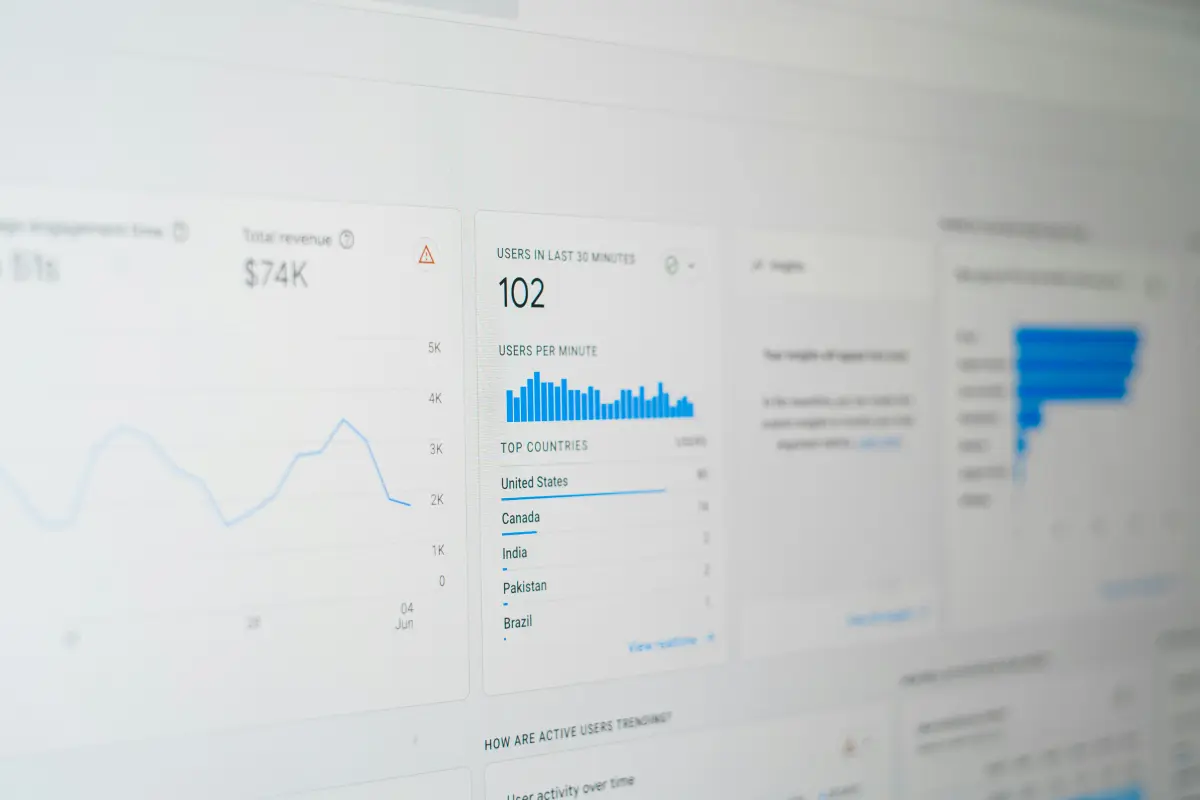
So how can manufacturers use Google to generate more leads?

Why Google Is Valuable for B2B Manufacturers
B2B purchasing decisions often take longer than consumer purchases. Buyers may compare several suppliers, research technical specifications, check certifications, evaluate manufacturing capabilities, and discuss options with colleagues before contacting a company.
Google is often part of this process.
A buyer might search for a product, manufacturer, supplier, application, technical solution, or comparison before they ever speak with a salesperson.
For example, searches such as industrial filter manufacturer, custom CNC machining supplier, or hotel linen manufacturer can indicate strong commercial intent.
If your website appears when these searches happen, SEO can help you reach potential customers before they contact competing suppliers.
The key is understanding which searches are valuable for your business and creating pages that match the intent behind them.
Focus on Qualified Traffic, Not Just More Traffic
One of the biggest mistakes in B2B SEO is treating organic traffic as the final goal.
More traffic does not necessarily mean more sales.
Imagine two websites:
- Website A receives 10,000 visitors from broad informational keywords and generates 5 inquiries.
- Website B receives 2,000 visitors from highly relevant product and supplier keywords and generates 40 inquiries.
Website B may have a much stronger SEO strategy even though its traffic is lower.
For manufacturers, the important question is not simply “How much traffic can we get?” but “Can we attract people who are likely to become customers?”
This means keyword selection should be closely connected to your products, markets, industries, and ideal customers.
Find Keywords with Commercial Intent
The first step toward generating leads from Google is identifying the searches that indicate purchasing intent.
Not every keyword deserves the same priority.
For manufacturers, keyword opportunities can generally be divided into several groups.
Product Keywords
These are searches for specific products or product categories.
- bag filter
- cartridge filter housing
- industrial static mixer
- hotel bath linen
These keywords are important because they directly relate to what your company sells.
Manufacturer and Supplier Keywords
Adding terms such as “manufacturer,” “supplier,” or “factory” can indicate stronger commercial intent.
- bag filter manufacturer
- industrial filtration system supplier
- custom machinery manufacturer
- hotel linen supplier
These searches are particularly valuable for B2B companies because the searcher may already be looking for a company to purchase from.
Application Keywords
Some buyers search according to their problem or application rather than the exact product name.
- filtration system for chemical processing
- industrial filtration for oil and gas
- custom metal parts for automotive
- hotel linen solutions for resorts
Application-based content can help manufacturers reach buyers earlier in the purchasing journey.
Informational Keywords
Informational searches are usually further from an immediate purchase, but they can still contribute to lead generation.
- how does a bag filter work
- how to choose an industrial filter
- bag filter vs cartridge filter
- what is the best material for industrial filtration
These searches can introduce potential buyers to your company and create opportunities to guide them toward relevant commercial pages.
Create Pages for Your Most Valuable Products
If a product is important to your business, it should generally have a dedicated page.
Many manufacturing websites make the mistake of listing dozens of products on one generic catalog page. This limits both SEO visibility and the information available to potential buyers.
A dedicated product page can target a specific search topic while giving buyers the information they need to evaluate the product.
A strong product page may include:
- Product overview
- Technical specifications
- Materials and configurations
- Applications
- Industries served
- Customization options
- Certifications
- Product images
- Technical downloads
- Related products
- Request a Quote CTA
This combination is important because SEO brings the visitor to the page, while the page itself needs to convince the visitor to continue the conversation.
If you are restructuring your website, our guide on what pages a B2B manufacturing website should have explains how product, industry, solution, case study, and resource pages can work together.
Build Content Around the B2B Buying Journey
Not every potential customer searches for your company using a product keyword.
A buyer may begin with a problem, then research different solutions, compare technologies, and finally search for suppliers.
Your SEO content should support these different stages.
For example:
Problem → Solution → Product → Supplier → Inquiry
Imagine a buyer needs to improve filtration efficiency. They may first search for information about filtration methods. Later, they may compare bag filters and cartridge filters. After choosing a technology, they may search for a manufacturer.
A manufacturer with content covering all these stages has more opportunities to enter the buying journey.
Useful content formats include:
- Buying guides
- Product comparisons
- Technical explainers
- Product selection guides
- Industry application articles
- Procurement FAQs
- Supplier comparison guides
- Case studies
Each article should have a clear relationship with your commercial offering instead of existing as isolated traffic content.
Use Internal Links to Move Visitors Toward Products
Generating organic traffic is only the beginning. You also need to guide visitors through your website.
Internal linking can create a natural path from informational content to commercial pages.
For example:
Blog Article → Product Category → Product Page → Case Study → Request a Quote
An article about choosing industrial filtration equipment could link to your filtration product category. The category page could link to specific products, while those products could link to relevant application pages and case studies.
This makes the website easier to navigate and helps search engines understand how your content is connected.
It also gives visitors a clear next step instead of leaving them at the end of an article with nowhere to go.
Show Buyers Why They Should Trust You
Ranking on Google does not automatically make a buyer trust your company.
B2B purchasing decisions can involve significant financial and operational risk, especially when customers are evaluating overseas manufacturers.
Your website should therefore provide evidence that your company can deliver what it promises.
Useful trust signals include:
- Manufacturing experience
- Factory information
- Production capacity
- Quality control processes
- Certifications
- Testing capabilities
- Export markets
- Customer or project references
- Case studies
- Real factory photographs and videos
Specific evidence is generally more convincing than generic marketing claims.
Instead of saying “We provide high-quality products,” explain what supports that claim. Show your production process, quality standards, certifications, testing procedures, or relevant project experience.
Optimize Your Pages for Conversion
Even a page ranking on the first page of Google can generate few leads if it is difficult to convert.
Every important commercial page should have a clear conversion path.
Depending on your business, useful CTAs may include:
- Request a Quote
- Get Pricing
- Send Your Requirements
- Request a Sample
- Talk to an Engineer
- Download Product Catalog
- Contact Sales
- Chat on WhatsApp
Do not force every visitor to use the same conversion method.
A visitor who is ready to purchase may want to request a quotation immediately. Another visitor may still be researching and prefer to download technical information first.
A strong B2B lead generation strategy provides multiple relevant conversion opportunities.
Make Your Quote Process Easy
One of the most valuable actions on a manufacturing website is the quotation request.
However, complicated forms can reduce the number of inquiries you receive.
Only ask for information that your sales team genuinely needs at the first stage.
A basic B2B inquiry form might request:
- Name
- Business email
- Company
- Country
- Product of interest
- Project requirements
You can collect additional information after the initial inquiry.
It is also useful to explain what happens next. For example, tell visitors when they can expect a response or what information they should provide to receive an accurate quotation.
Use Case Studies to Capture Commercial Intent
Case studies are particularly valuable for B2B manufacturers because they combine SEO, credibility, and conversion.
A good case study can show:
- The customer’s industry
- The original problem
- The required solution
- The products or technologies used
- The implementation process
- The results
Case studies can also target long-tail searches related to industries and applications.
For example, instead of only targeting “industrial filter manufacturer,” a company could create content around a specific filtration application in the chemical, food, water treatment, or oil and gas industry.
This can help capture highly relevant searches while giving sales teams useful proof to share with prospects.
Use Google Search Data to Find New Opportunities
Your existing search data can reveal opportunities that were not obvious during the original keyword research.
Google Search Console can show the queries that generate impressions and clicks for your website.
Look for keywords that:
- Already generate impressions but have low rankings
- Have strong commercial relevance
- Generate clicks but lead to weak landing pages
- Reveal new product or application topics
- Could be developed into dedicated pages
For example, you may discover that a product page receives impressions for a specific application keyword that you never intentionally targeted. That could be a signal to create a dedicated application page and strengthen the internal links around the topic.
SEO should become more intelligent over time as you collect real search data.
Combine SEO with Google Ads
SEO and Google Ads can support each other.
Google Ads can provide faster feedback on which commercial keywords generate clicks and inquiries. SEO can then be used to build long-term organic visibility around valuable search terms.
For example, if a Google Ads campaign consistently generates qualified inquiries for a particular product keyword, that keyword may deserve a dedicated SEO page.
Likewise, SEO data can reveal high-performing organic keywords that could potentially be tested through paid search.
This creates a feedback loop between paid and organic search rather than treating the two channels as completely separate.
Improve Your Website Before Trying to Get More Traffic
Sometimes the best way to generate more leads from Google is not to increase traffic first.
It is to improve the website you already have.
Review your most important organic landing pages and ask:
- Does the page clearly explain the product?
- Does it match the search intent?
- Does it provide enough technical information?
- Does it show why buyers should trust the company?
- Is the CTA easy to find?
- Can visitors request a quotation easily?
- Does the page work well on mobile?
- Does it load quickly?
A page that ranks well but converts poorly is an optimization opportunity.
This is where B2B SEO and conversion optimization need to work together.
You can also read our guide on 10 common B2B website mistakes that cost you leads for a practical review of the issues that can reduce conversions.
Track Leads, Not Just Rankings
Keyword rankings are useful indicators, but they do not tell you whether SEO is generating business.
Manufacturers should track actions that have commercial value.
| Metric | Why It Matters |
|---|---|
| Organic impressions | Shows how often your pages appear in Google |
| Organic clicks | Measures search traffic reaching your website |
| Commercial page traffic | Shows whether buyers are reaching product and solution pages |
| Quote requests | Measures direct lead generation |
| Email clicks | Tracks visitors contacting sales by email |
| WhatsApp clicks | Measures direct conversations with potential buyers |
| Qualified leads | Shows whether SEO is attracting the right customers |
The most important metric is ultimately the quality of the leads generated.
Ten highly relevant inquiries can be more valuable than thousands of visitors who have no intention of purchasing your products.
Build an SEO Funnel for Your Manufacturing Business
A mature B2B SEO strategy should cover more than individual keywords. It should create a complete search-to-lead funnel.
A simple structure could look like this:
Google Search → Educational Content → Product / Solution Page → Trust Evidence → CTA → Inquiry
For example, a buyer may discover an educational article through Google. The article introduces a specific product or solution and links to the relevant commercial page. The product page explains specifications and applications, while a case study demonstrates previous experience. A clear Request a Quote CTA then gives the buyer an easy way to contact the company.
Each page has a role.
This is much more effective than publishing hundreds of articles without a clear connection to your products and sales process.
How Long Does It Take to Generate Leads from SEO?
SEO is a long-term acquisition strategy, particularly for a new manufacturing website.
How quickly you generate leads depends on several factors, including your website’s existing authority, keyword competition, content quality, technical foundation, backlink profile, and target market.
New websites may first need to build search visibility and establish topical authority before competitive commercial keywords begin generating significant traffic.
Instead of expecting immediate results, measure progress through stages:
- Pages indexed
- Search impressions
- Keyword visibility
- Organic clicks
- Commercial page traffic
- Conversion actions
- Qualified inquiries
This gives you a much clearer picture of whether your SEO strategy is moving in the right direction.
Common B2B SEO Mistakes That Limit Leads
Manufacturers often invest in SEO but fail to generate enough inquiries because of a few recurring problems.
- Targeting keywords with traffic but little commercial value
- Creating content unrelated to products or customers
- Using generic product descriptions
- Having too few dedicated product pages
- Ignoring industry and application searches
- Weak internal linking
- Poor calls to action
- Complicated inquiry forms
- Ignoring mobile UX and website speed
- Measuring traffic instead of qualified leads
Fixing these issues can often produce better results than simply publishing more content.
A Practical B2B SEO Lead Generation Process
If you want to use Google as a consistent source of B2B leads, start with a structured process:
- Define your ideal customers and target markets.
- Analyze competitors and their organic search visibility.
- Research product, supplier, application, and informational keywords.
- Map important keywords to specific website pages.
- Create and optimize product and category pages.
- Build industry, application, and solution pages.
- Publish useful content based on real buyer questions.
- Build internal links between informational and commercial pages.
- Improve technical SEO, mobile UX, and website performance.
- Add clear CTAs and simple inquiry forms.
- Build relevant backlinks and industry authority.
- Track organic leads and continuously improve high-value pages.
This approach turns SEO from a traffic-generation exercise into a structured B2B acquisition system.
Final Thoughts
B2B SEO can help manufacturers reach potential customers at exactly the moment they are searching for products, suppliers, and solutions.
But generating leads from Google requires more than ranking for keywords.
You need to attract the right searches, create pages that answer buyer questions, demonstrate manufacturing credibility, connect content to commercial pages, and make it easy for visitors to request a quotation or start a conversation.
The most effective approach is to think about the entire journey:
Search visibility → Relevant traffic → Useful information → Trust → Conversion → Qualified lead.
When these elements work together, your website can become a long-term source of qualified B2B opportunities rather than simply another online company profile.
If you want to build a website designed around SEO and lead generation, explore Orangeeweb’s Google SEO services, B2B website design, and WordPress website development.