
What Makes a B2B Website Generate Leads?
The biggest difference between a normal company website and a B2B lead generation website is the purpose behind the design. A traditional website may focus primarily on presenting company information, while a B2B lead generation website is designed around the questions and concerns of potential buyers.
B2B purchasing decisions are rarely made after looking at one page. A procurement manager may want to know what products you offer, while an engineer may be more interested in specifications and technical performance. Another buyer may want to see your certifications, production capacity, previous projects, or experience working with international customers.
This means a successful B2B website needs to provide enough useful information to move visitors through the buying process. Your homepage should explain your value clearly, your product pages should answer product-related questions, and your case studies and company information should provide evidence that you can actually deliver what you promise.
The basic journey should be simple: a potential customer finds your website, understands what you do, finds the information they need, develops enough confidence to consider your company, and then has an obvious way to contact you.
Define Your Target Customers and Buyer Journey
Before starting any B2B website design project, you need to know exactly who the website is supposed to attract. This sounds obvious, but many B2B companies skip this step and end up with websites that try to speak to everyone.
For a manufacturer, the target audience might include importers, distributors, wholesalers, brand owners, contractors, project buyers, procurement managers, or engineers. These people may all be interested in the same company, but they do not necessarily look for the same information.
For example, a procurement manager may want to know about minimum order quantities, production capacity, delivery times, certifications, quality control, and customization. An engineer may care much more about materials, dimensions, technical specifications, performance, and application conditions. A distributor may be more interested in product range, packaging, private labeling, and long-term supply capabilities.
Your B2B website strategy should take these differences into account. Instead of building pages simply because they are part of your internal company structure, create content around the questions your customers ask before they contact a supplier.
This approach also makes B2B SEO more effective because the website naturally covers the topics and search terms that potential customers are already using.
Build the Right B2B Website Structure
A clear B2B website structure makes it easier for visitors to find information and gives search engines a better understanding of your business. A manufacturing website, for example, might have main sections such as Products, Industries, Solutions, Applications, Case Studies, About Us, Certifications, Resources, and Contact.
The exact structure will depend on the business, but the important thing is to create a logical path from general information to more specific information. A visitor might start with a product category, move to a specific product, read about its applications, and then request a quotation.
Your product architecture is particularly important. Instead of putting dozens of products on one page, create dedicated pages for important products and product categories. This gives potential customers more useful information and also creates more opportunities for your website to rank for specific B2B search terms.
For example, an industrial equipment manufacturer should not necessarily target only a broad term such as “industrial equipment.” Individual pages can target more specific searches based on product type, material, application, or technical requirements. These more specific searches often have much stronger commercial intent.
Create a High-Converting B2B Homepage
Your homepage is usually the first major impression a potential customer gets of your company. It does not need to explain everything, but it should make your positioning clear very quickly.
A common mistake in B2B website design is using vague headlines such as “Professional Manufacturer” or “Your Trusted Partner.” These statements sound positive, but they do not tell a buyer what the company actually provides or why they should care.
A stronger homepage explains what you do, who you serve, and what makes your company relevant. For example, a manufacturer could position itself around a specific product category, industry, application, or capability rather than using a generic corporate statement.
The rest of the homepage should then support that positioning. Introduce your key products, explain the industries you serve, highlight important capabilities, show relevant projects or customers, and provide evidence such as certifications or production facilities. Most importantly, give visitors a clear next step.
A “Request a Quote” button may be appropriate for buyers who are ready to purchase, while “Talk to an Expert” or “Get Product Information” can work better for visitors who are still researching. Good B2B website design recognizes that not every visitor is at the same stage of the buying process.
Optimize Product Pages for Lead Generation
For many B2B companies, product pages are actually more important than the homepage. A potential customer searching Google for a specific product may land directly on a product page without ever seeing your homepage.
That means your product pages need to work independently. A visitor should be able to understand the product, determine whether it fits their requirements, and find a way to contact you without having to search through the rest of the website.
A strong B2B product page should provide useful information about the product’s features, specifications, materials, applications, available configurations, customization options, and relevant certifications. If you have real project experience or customer applications, include those as well.
Avoid creating product pages that consist of a product name, several images, and two short paragraphs. This type of page may look clean, but it often does very little for either the buyer or search engines.
Detailed product content also gives you the opportunity to target more specific search queries. Instead of trying to rank for a broad term such as “industrial filter,” you can create useful content around terms such as “high flow industrial filter,” “stainless steel pipeline filter,” or “custom industrial filtration system.” The more closely the page matches the buyer’s actual requirement, the more useful the resulting traffic can be.
Add Clear Calls to Action
Even a well-designed website can fail to generate leads if visitors do not know what to do next.
B2B buyers often need time to evaluate a supplier before making contact, so it is useful to provide different conversion options rather than relying on a single contact form. Depending on your business, these might include Request a Quote, Send an Inquiry, Talk to an Expert, Download a Catalog, or Contact Our Sales Team.
The important thing is that the CTA should match the visitor’s intent. Someone searching specifically for a supplier may be ready to request a quotation, while someone reading an educational article may only be starting their research.
You also do not need to turn every section of the website into a sales pitch. A good B2B website CTA should feel like a natural next step based on the information the visitor has just read.
Optimize Your B2B Website for Google SEO
A website cannot generate many leads if the right people never find it. This is where B2B SEO becomes an important part of the website strategy.
For a B2B company, SEO should start with understanding the search behavior of potential customers. Instead of focusing only on high-volume keywords, research terms related to your products, applications, industries, technical requirements, and purchasing intent.
Product pages can target specific commercial keywords, while industry and solution pages can address broader searches. Blog content can answer questions that potential buyers have before they are ready to contact a supplier.
Technical SEO is also important. A B2B website should load quickly, work well on mobile devices, have a logical internal linking structure, and make it easy for search engines to crawl and understand important pages.
However, the goal of B2B website SEO should not simply be to increase traffic. The goal is to attract potential buyers who are relevant to your business.
Use Google Ads to Generate Leads Faster
SEO is a long-term strategy, but Google Ads for B2B can help companies reach potential buyers much faster. When someone searches for a product or supplier with clear commercial intent, appearing at the top of the search results can put your company in front of them at exactly the right moment.
The problem is that many companies send all of their Google Ads traffic to the homepage. This is rarely the best approach.
If someone searches for a specific product, they should ideally land on a page that directly addresses that product and their likely requirements. The landing page should explain the offer clearly and make it easy to request a quote or contact the sales team.
This creates a much stronger B2B lead generation path from search to conversion: the buyer searches for something specific, lands on a relevant page, finds the information they need, and submits an inquiry.
SEO and Google Ads can therefore work together rather than being treated as competing channels. Google Ads can capture immediate demand while SEO builds long-term organic visibility.
Optimize Your Website for AI Search
Search is changing, and B2B companies should also think about how their websites appear in AI-powered search experiences.
Potential customers are increasingly asking AI platforms questions about suppliers, manufacturers, products, and solutions. Instead of searching for ten different websites themselves, they may ask an AI system to recommend suitable companies or explain which suppliers are worth considering.
This is where AI Search Optimization, or Generative Engine Optimization (GEO), becomes relevant.
A GEO-friendly website needs clear and reliable information about the company, products, industries, applications, expertise, and customer experience. Detailed product pages, useful educational content, case studies, FAQs, original insights, and consistent company information all help establish a stronger online presence.
The key is not to create content simply because it contains the phrase “GEO.” The website needs to demonstrate genuine expertise and provide information that can be understood and referenced by both search engines and AI systems.
This is also why SEO and GEO should not be treated as completely separate strategies. A technically strong website with useful, authoritative content provides a much better foundation for both traditional search and AI search.
Add WhatsApp Automation for Faster Lead Follow-Up
For international B2B companies, WhatsApp can be another useful channel for converting website visitors into conversations.
Some buyers may not want to fill out a long inquiry form. They may prefer to ask a quick question about pricing, availability, customization, specifications, or delivery. A clearly visible WhatsApp option gives them a faster way to start that conversation.
WhatsApp automation can take this a step further. Instead of relying entirely on a salesperson to respond manually to every initial inquiry, companies can automate basic greetings, product selection, qualification questions, and follow-up messages.
This can be particularly useful for companies selling internationally because potential customers may contact you outside your normal working hours. A simple automated workflow can capture the inquiry first and allow your sales team to continue the conversation later.
The goal is not to replace human salespeople. It is to make sure that valuable leads do not disappear simply because nobody was available to respond immediately.
How to Measure B2B Website Lead Generation
Website traffic is useful, but it should not be the main measure of success.
For a B2B lead generation website, you should pay attention to what happens after visitors arrive. How many people request a quote? How many submit an inquiry? How many click WhatsApp? How many contact your sales team? More importantly, how many of those leads are actually qualified?
A website that receives 10,000 visitors but generates very few relevant inquiries may not be performing as well as a website that receives 2,000 highly targeted visitors and generates dozens of qualified leads.
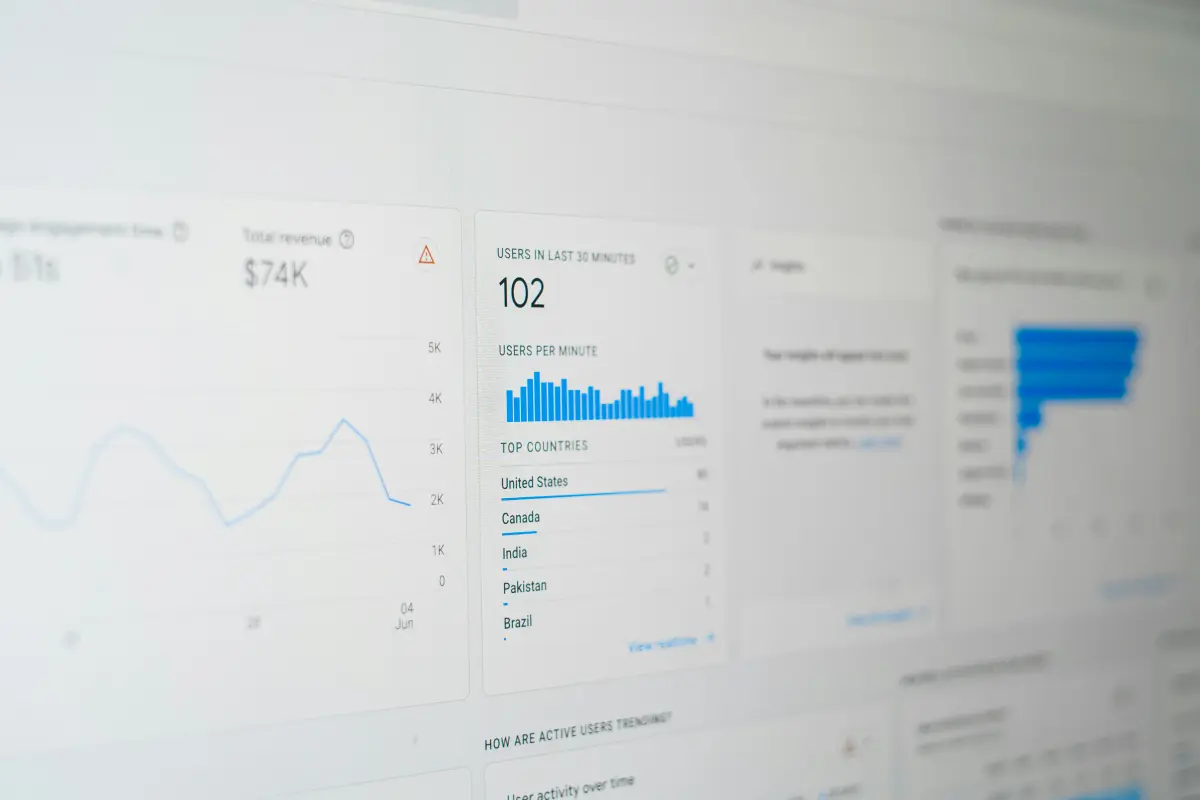
This is why conversion tracking should be set up from the beginning. Important actions such as form submissions, quote requests, WhatsApp clicks, phone calls, and downloads can be tracked using tools such as Google Analytics, Google Tag Manager, and Google Search Console.
Once you understand which pages, keywords, and campaigns generate qualified leads, you can make better decisions about where to invest your marketing budget.
Common B2B Website Mistakes
One of the most common mistakes is designing the website around the company rather than the customer. Companies naturally want to talk about their history, factory, equipment, and achievements, but potential customers are usually more interested in whether you can solve their particular problem.
Another common issue is insufficient product information. If a buyer cannot find the specifications, applications, materials, customization options, or certifications they need, they may simply move on to another supplier.
Some websites also have weak calls to action. Visitors may be interested in the company but have no obvious way to request information or speak with someone.
Poor SEO structure is another problem. Important products may be buried several clicks deep, while the website contains very little useful content around the terms potential buyers actually search for.
Finally, many companies focus heavily on getting more traffic without improving the website’s ability to convert that traffic. More visitors will not automatically produce more business if the website does not provide the right information or a clear path to conversion.
B2B Website Lead Generation Checklist
Before launching a B2B website, take a step back and look at it from the perspective of a potential buyer. Can they understand what your company does within a few seconds? Can they quickly find the products or solutions they are looking for? Do your product pages contain enough information to support a purchasing decision? Can they see evidence that your company is trustworthy and capable?
The website should also have clear calls to action, mobile-friendly pages, fast loading times, a solid SEO structure, and proper conversion tracking. If you are using Google Ads, your landing pages should match the search intent behind your campaigns. If you want to build visibility in AI search, your website should contain authoritative and well-structured information that demonstrates genuine expertise.
Most importantly, there should be a clear process for handling the leads that come in. Generating an inquiry is only the beginning. Fast and professional follow-up is what turns website leads into actual business opportunities.
Final Thoughts
A high-performing B2B website is not simply a digital brochure. It is part of your sales and marketing system.
The best websites connect several elements together: professional B2B website design, useful product and industry content, search engine optimization, conversion optimization, Google Ads, AI Search Optimization, and effective lead follow-up.
For manufacturers and exporters, this approach can turn a website from a passive company profile into an active source of qualified international leads.
The objective is simple: don’t just build a B2B website. Build a website that helps the right buyers find you, understand your value, trust your capabilities, and take the next step.