
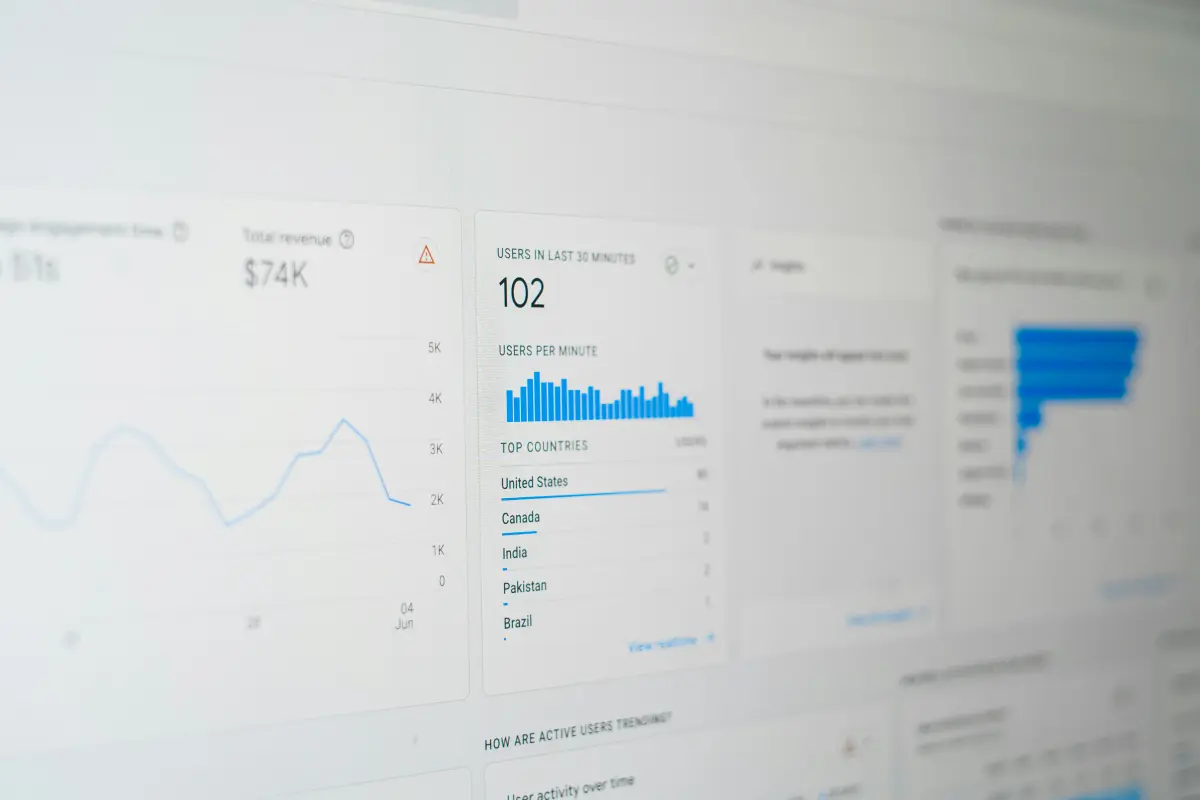
AI-powered search engines like ChatGPT, Perplexity, Google AI Overviews, Gemini, and Claude are fundamentally changing how content is discovered. By 2026, AI search engines handle an estimated 12–18% of English-language informational queries, up from under 2% a year earlier, and AI-referred traffic converts at roughly 4–5 times the rate of standard organic search traffic [citation:9][citation:10]. For global B2B manufacturers, optimizing your entire website—not just your content—for AI crawlers is no longer optional. At Orangeeweb, we’ve helped B2B clients achieve 3%–10% conversion rates from AI traffic through our integrated services: WordPress development, SEO, Google Ads, web design, GEO, and WhatsApp automation.
Executive Summary
Optimizing your website for AI search in 2026 requires a multi-layered approach. Technical foundations are critical: allow AI crawlers (GPTBot, PerplexityBot, ClaudeBot) in robots.txt, ensure server-side rendering (SSR) for key content, and audit your accessibility tree—AI agents use it as their primary map of your site [citation:1]. Structured data (JSON-LD schema) shows 30–40% higher visibility in AI-generated answers [citation:6]. Content strategy must shift to answer-first structure (BLUF format), with statistics and authoritative citations boosting visibility by 30–40% [citation:1][citation:6]. Monitor AI visibility via Google’s new Generative AI performance reports in Search Console and track citations across platforms [citation:1][citation:7]. Businesses that adopt these strategies see up to 357% growth in AI-powered referrals, with ChatGPT accounting for 78% of that traffic [citation:9].
Table of Contents
- 1. Understanding AI Search in 2026
- 2. Crawlability: Can AI Find Your Site?
- 3. Accessibility: The AI-Agent Interface
- 4. Rendering: JavaScript Is a Blind Spot
- 5. Structured Data: Schema for AI Citations
- 6. Content Strategy: Writing for AI Citation
- 7. Query Fan-Out: Capturing Sub-Questions
- 8. Monitoring: Measuring AI Visibility
- Comparison Table: SEO vs. GEO vs. AEO (2026)
- AI Website Optimization Checklist (2026)
- Case Study: B2B Manufacturer Gains 300% AI Citations
- Statistics: Why AI Visibility Matters in 2026
- FAQ
- Key Takeaways
1. Understanding AI Search in 2026
AI search in 2026 is not a single channel. ChatGPT, Perplexity, Gemini, Claude, and Google AI Overviews each retrieve from different source pools, weight different signals, and cite brands at wildly different rates—sometimes by a factor of more than 40x for the same query [citation:9].
Platform Breakdown: Citation Rates Vary Dramatically
A 2026 study analyzing 34,234 AI responses found that ChatGPT cited brands in just 0.59% of answers, while Perplexity cited brands in 13.05%, a roughly 46x difference [citation:9]. Claude gave brands the highest owned-citation share at 9.1%, with Perplexity at 6.8%, and ChatGPT was consistently the lowest across every brand tested [citation:9].
- ChatGPT: Lowest brand-citation rate but highest absolute traffic volume (78% of all AI referral traffic in June 2025). About 31% of ChatGPT queries trigger a live web search; the rest are answered from training data [citation:9].
- Perplexity: Highest brand-citation rate (13.05%) and most sensitive to source mix changes. After Reddit sued Perplexity in October 2025, Perplexity’s Reddit citations dropped roughly 86% overnight [citation:9].
- Google AI Overviews: Only about 38% of pages cited in AI Overviews also rank in the top 10 organic results for the same query—62% come from outside the top 10 [citation:9].
The takeaway: a single citation-rate number blended across engines hides where your actual gap is. Each platform requires a tailored approach [citation:9].
2. Crawlability: Can AI Find Your Site?
Before AI can cite your content, it must be able to crawl it. Google is explicit: AI search features are built on publicly accessible, crawlable content [citation:1].
Critical AI Crawlers to Allow in 2026
- OpenAI: GPTBot (training), OAI-SearchBot (ChatGPT citations), ChatGPT-User (real-time) [citation:2]
- Perplexity: PerplexityBot (indexing)—Perplexity-User does not respect robots.txt [citation:2]
- Anthropic: ClaudeBot (training), Claude-SearchBot (citations) [citation:2]
- Google: Googlebot, Google-Extended (Gemini training opt-out) [citation:2]
The Three Bot Types Visiting Your Site
Not all AI crawlers are equal. Segmenting them is critical for accurate analysis [citation:2]:
- Training bots (GPTBot, ClaudeBot): Crawl deeply but have no direct impact on citations. Awareness only.
- AI search bots (OAI-SearchBot, PerplexityBot): Discover new URLs, visit deep pages ~once/month. Critical gatekeeper for AI visibility.
- AI user bots (ChatGPT-User, Perplexity-User): Triggered by real user queries. Closest proxy to an AI impression [citation:2].
Key insight: If you’re not segmenting AI bot traffic by type in your log analysis, you have no idea which pages are actually visible to AI [citation:2].
Robots.txt Audit
A 30-minute robots.txt audit can prevent you from accidentally blocking the crawlers you want in [citation:2]. Review all Disallow and Allow directives for every user-agent line by line. Cloudflare changed its default configuration in 2024 to block AI crawlers—if you use Cloudflare, you may have inadvertently blocked every major AI platform [citation:1].
3. Accessibility: The AI-Agent Interface
The accessibility tree is the most important—and least understood—channel for AI visibility in 2026. It’s a browser-native API that distills your DOM into roles, names, and states of interactive elements. Screen readers use it. AI agents use it as their primary, high-fidelity map of your site [citation:1].
What breaks the accessibility tree [citation:1]:
- Missing ARIA labels on interactive elements
- Unlabeled icons that convey meaning without text
- Interactive elements built from non-semantic HTML (
<div>instead of<button>) - Form fields without descriptive attributes
Key Insight: “Accessibility debt is now GEO debt” [citation:1]. A site that scores poorly on accessibility criteria is also a site that AI agents will struggle to read, cite, and surface. Fixing accessibility issues creates measurable GEO gains.
How AI Agents Actually Read Your Site
AI agents use three primary methods—and most sites fail on at least one [citation:1]:
- Screenshots: Visual rendering capture. Slow and computationally expensive—a fallback method.
- Raw HTML: Direct DOM reading.
<div>soup gives no structural signal; semantic HTML (buttons, nav, article) tells the agent everything. - Accessibility tree: The most important channel. AI agents filter out visual noise to focus on pure functional intent.
4. Rendering: JavaScript Is a Blind Spot
Most AI crawlers (ChatGPT-User, PerplexityBot, ClaudeBot) do not execute JavaScript [citation:1][citation:2]. If your product pages or key articles load content client-side, those agents read an empty shell.
The fix:
- Use Server-Side Rendering (SSR) or static HTML for core content [citation:1][citation:2]
- Ensure key content is visible in raw HTML—not just after JavaScript execution
- The exception is Google Gemini, which uses the same Web Rendering Service as Googlebot [citation:2]
- Important content behind accordions or “View More” elements requires JavaScript execution that AI bots skip entirely [citation:2]
What to check: Use Google Search Console’s URL Inspection tool to see how Googlebot actually renders your most important pages. What you see there is roughly what AI systems see [citation:1].
5. Structured Data: Schema for AI Citations
Content with proper schema markup shows 30–40% higher visibility in AI-generated answers [citation:6]. Priority schema types for 2026:
- FAQPage – The single highest-impact and easiest-to-implement starting point. Explicitly hands AI a list of questions and answers [citation:6][citation:7].
- Organization – Define your brand entity with logo, social profiles (sameAs), and contact info
- Product – Specifications, pricing, availability—essential for e-commerce
- Article / TechArticle – Clearly identifies author and establishes E-E-A-T signals
- Speakable – JSON-LD that voice assistants and AI agents read aloud
Entity consistency is critical: use the same @id URL for authors and organizations across pages so AI models build a unified knowledge graph [citation:6].
6. Content Strategy: Writing for AI Citation
AI engines retrieve passages, not pages. LLMs extract and cite specific passages, so clear structure makes pages easier to parse and excerpt [citation:1][citation:7].
The “Citations, Quotes, and Stats” Framework
Princeton KDD 2024 research identified three tactics that drove the highest increase in AI visibility [citation:1][citation:6]:
- Cite Sources (+30–40%): Linking to authoritative external sources signals rigorous research
- Statistics Addition (+30–40%): Replace qualitative text with quantitative data (e.g., “53% of consumers”)
- Quotation Addition (+30–40%): Including quotes from known experts associates content with expert entities
BLUF (Bottom Line Up Front) Format
Open every section with a direct answer that provides value immediately [citation:1][citation:6][citation:7].
Key principles [citation:1][citation:6]:
- The first 200 words of any article must directly and completely answer the primary query
- Rephrase H2 and H3 headings as explicit questions that match how users query AI tools
- Add a TL;DR summary at the top of long-form content
- Eliminate vague introductions that delay the value—they are invisible to LLMs and frustrating to humans
Non-Commodity Content: The E-E-A-T Factor
Google’s AI optimization guide draws a sharp line between content that gets cited and content that gets ignored—and the dividing line is expertise [citation:1]. Generic, broadly available information has no advantage in AI search. AI systems already know the common answers. What they look for when deciding what to cite is content that offers something beyond common knowledge: original analysis, first-hand experience, expert perspective, and data that doesn’t exist elsewhere [citation:1].
Content Freshness
LLMs parse last-updated metadata to assess source recency. Over 70% of pages cited by ChatGPT were updated within 12 months, but content updated in the last three months performs best across all intents [citation:7].
7. Query Fan-Out: Capturing Sub-Questions
When a user submits a complex query, AI systems decompose it into multiple parallel sub-queries—a process called “query fan-out” [citation:2].
Key insights [citation:2]:
- 95% of queries driving AI citations have zero monthly search volume—they’re synthetic sub-queries
- 10-word queries grew 161% year-over-year, with CTR collapsing to 2.26% (down from 8–11% in 2023)
- These are “phantom impressions”—real signals your content is being evaluated inside AI reasoning chains
How to find fan-out opportunities [citation:2]: Use Google Search Console API to export queries with length > 7 words, impressions < 50, clicks = 0. That’s your Fan-Out Opportunity Matrix—the exact questions AI agents are asking about your content.
Which content types fan out most [citation:2]: List and comparison queries, product reviews, side-by-side specs. “Product review” intent queries surged from 239 in June 2025 to over 40,000 by September 2025—a 16,000% increase driven by AI agents systematically harvesting structured opinion data.
8. Monitoring: Measuring AI Visibility
Traditional SEO tools don’t track AI citations. You need specialized monitoring [citation:1][citation:7][citation:9].
Google Search Console: Generative AI Performance Reports
Google launched Generative AI performance reports in Search Console (June 2026). For the first time, you can see exactly how your content is performing inside AI Overviews and AI Mode—impressions, clicks, and which pages are being surfaced in generative responses [citation:1].
Key Metrics to Track [citation:7][citation:9]
- Citation Frequency: How often your content is cited in AI responses (8–15% is good, 15–25% is market leader)
- Brand Mention Share: How often your brand appears across relevant prompts
- Share of Model: The proportion of AI-generated responses in which your brand appears
- AI Referral Traffic: Track via GA4 by segmenting AI bot traffic separately
Manual Monitoring [citation:9]
- Search your target queries in ChatGPT, Perplexity, Gemini, and Claude
- Document which sources get cited
- Note whether your brand appears
- Compare to competitor coverage—a brand that only checks one engine doesn’t know where its actual gap is
Comparison Table: SEO vs. GEO vs. AEO (2026)
| Dimension | Traditional SEO | GEO (Generative Engine Optimization) | AEO (Answer Engine Optimization) |
|---|---|---|---|
| Primary Goal | Rank in list of links | Be cited in AI-generated answers | Be the direct answer itself |
| Success Metric | Rankings, clicks, traffic | Citation frequency, brand mentions | Featured snippets, zero-click answers |
| Content Focus | Keywords, backlinks | Statistics, citations, BLUF structure | Direct Q&A, concise answers |
| Technical Need | Crawlable by Googlebot | SSR, JSON-LD schema, AI crawler access | FAQ schema, structured data |
| Key Insight | SEO determines if AI crawlers can find and trust your page | GEO determines if your page gets pulled into the answer | AEO determines if your page becomes the answer |
Source: SEO in 2026: How AI is reshaping the fundamentals of search [citation:10]
AI Website Optimization Checklist (2026)
- ✅ Allow AI user agents in robots.txt: GPTBot, OAI-SearchBot, ChatGPT-User, PerplexityBot, ClaudeBot, Google-Extended [citation:2]
- ✅ Check server logs for AI bot activity—segment by training/search/user types [citation:2]
- ✅ Ensure primary content renders without JavaScript (SSR or static HTML) [citation:1][citation:2]
- ✅ Audit accessibility tree in Chrome DevTools—fix missing ARIA labels and non-semantic HTML [citation:1]
- ✅ Implement JSON-LD schema: FAQPage, Organization, Product, Article, Speakable [citation:6]
- ✅ Apply BLUF format—open every section with a 20–25 word direct answer [citation:1][citation:6]
- ✅ Add statistics with primary source citations (30–40% higher citation rates) [citation:1][citation:6]
- ✅ Include expert quotes attributed to authoritative individuals [citation:1][citation:6]
- ✅ Structure content for fan-out queries: lists, comparisons, side-by-side specs [citation:2]
- ✅ Monitor Google Search Console Generative AI performance report [citation:1]
- ✅ Track AI citations manually in ChatGPT, Perplexity, Gemini, and Claude [citation:9]
- ✅ Update content at least quarterly—freshness is non-negotiable [citation:7]
- ✅ Maintain server response times <200ms for LLM retrieval windows [citation:7]
Case Study: B2B Manufacturer Gains 300% AI Citations
A global industrial parts manufacturer partnered with Orangeeweb to improve AI search visibility in 2025–2026. We implemented a comprehensive GEO strategy including:
- Robots.txt audit allowing all major AI crawlers (GPTBot, OAI-SearchBot, PerplexityBot)
- Server-side rendering for all product pages and key content
- Accessibility tree audit and ARIA label implementation
- JSON-LD schema: FAQPage, Organization, Product, Article
- Content restructured into BLUF format with statistics and authoritative citations
- Entity consistency with unified @id references for authors and products
- Quarterly content refresh cycle
Results (6 months):
- AI citations in ChatGPT, Perplexity, and Claude increased by 300%
- Organic traffic from AI referrals grew by 180%
- Conversion rate from AI-driven leads reached 5.2%, compared to the industry average of 1%
- Brand mention share in AI responses increased from 2% to 18%
Read more success stories on our case studies page.
Statistics: Why AI Visibility Matters in 2026
- 357% growth in AI-powered referrals to websites (June 2025), with ChatGPT accounting for 78% of that traffic [citation:9]
- Content with schema markup shows 30–40% higher visibility in AI-generated answers [citation:6]
- AI traffic converts at 4–5x the rate of traditional organic search traffic [citation:9][citation:10]
- 95% of queries driving AI citations have zero monthly search volume [citation:2]
- 10-word queries grew 161% year-over-year, driven by AI query fan-out [citation:2]
- AI search engines now handle an estimated 12–18% of English-language informational queries (early 2026) [citation:9]
- 58% of users have replaced traditional search engines with AI-driven tools for product discovery [citation:6]
- Zero-click search has reached roughly 60% of all Google queries in 2026 [citation:9]
- Orangeeweb clients achieve 3%–10% conversion rates from AI traffic, outpacing the 1% industry average
FAQ: Optimizing Websites for AI Search in 2026
What is the difference between SEO and GEO in 2026?
SEO optimizes for rankings in link-based search results, while GEO (Generative Engine Optimization) optimizes for citations and brand mentions within AI-generated answers from platforms like ChatGPT, Perplexity, and Google AI Overviews [citation:6][citation:10].
Do AI crawlers execute JavaScript?
Most AI crawlers like ChatGPT-User and PerplexityBot do not execute JavaScript. Server-side rendering (SSR) or static HTML is essential for AI visibility [citation:1][citation:2].
What is the accessibility tree and why does it matter for AI?
The accessibility tree is a browser-native API that distills your DOM into roles, names, and states of interactive elements. AI agents use it as their primary high-fidelity map of your site—fixing accessibility issues creates measurable GEO gains [citation:1].
What is query fan-out in AI search?
Query fan-out occurs when an AI system decomposes a single user prompt into dozens of parallel sub-queries. 95% of queries driving AI citations have zero search volume, making fan-out optimization critical [citation:2].
How can I measure if my site is visible in AI search?
Google’s Generative AI performance reports in Search Console show impressions and clicks in AI Overviews and AI Mode. You can also track AI citations manually across ChatGPT, Perplexity, Gemini, and Claude [citation:1][citation:9].
Does Orangeeweb offer AI search optimization services?
Yes, Orangeeweb provides comprehensive AI search optimization (GEO) alongside WordPress development, Google SEO, Google Ads, web design, and WhatsApp automation for B2B manufacturers worldwide.
What are the most effective tactics for AI citation in 2026?
Research shows the top three tactics are: citing authoritative sources (+30–40%), adding specific statistics (+30–40%), and including expert quotes (+30–40%) [citation:1][citation:6].
How fresh does my content need to be for ChatGPT?
Over 70% of pages cited by ChatGPT were updated within 12 months, but content updated in the last three months performs best across all intents [citation:7].
What is non-commodity content and why does it matter for AI?
Non-commodity content offers original analysis, first-hand experience, expert perspective, and data that doesn’t exist elsewhere. Generic, broadly available information has no advantage in AI search [citation:1].