
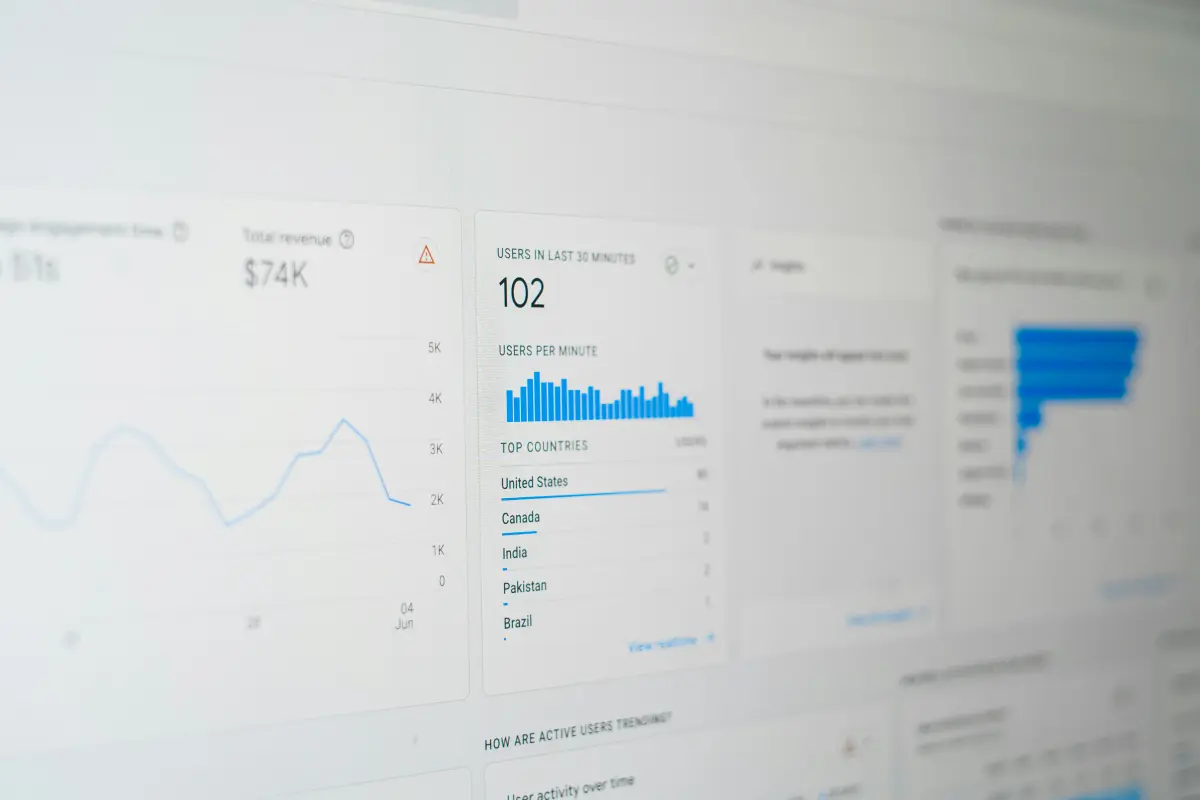
Google Ads is not what it used to be. In 2026, AI runs through everything in the platform. Smart campaigns optimize bids in milliseconds, Performance Max decides where your ads show across YouTube, Search, and Display, and even ad copy suggestions are served up by machine learning. It’s as if you went from driving a stick-shift to sitting in a self-driving car almost overnight .
At Orangeeweb, we help B2B businesses leverage AI-powered Google Ads to maximize return on ad spend, alongside WordPress development, SEO, web design, and GEO. This guide explains how AI optimizes PPC campaigns and what you need to know to stay ahead in 2026.
Executive Summary
AI is transforming Google Ads PPC from tactical keyword management to system optimization . Key AI-driven tools include: (1) AI Max for Search, now out of beta, which uses broad match and keywordless targeting to find converting queries your keyword list missed—delivering 7% more conversions on average ; (2) Smart Bidding, which optimizes bids in real time based on conversion likelihood and requires clean conversion data to perform effectively ; (3) Performance Max, which has received over 90 quality improvements in the past year, driving conversion increases exceeding 10% ; and (4) AI Brief, powered by Gemini, which lets you guide Google’s AI using plain language to shape how your campaigns find and represent you . However, human oversight remains essential—automation follows the path of least resistance, and without guardrails, campaigns can chase low-quality leads and waste budget .
Table of Contents
- 1. The AI-Powered PPC Landscape in 2026
- 2. Smart Bidding: AI-Powered Bid Management
- 3. AI Max for Search: Beyond Keyword Targeting
- 4. Performance Max: Cross-Channel AI Optimization
- 5. Input Design: The New Keyword Research
- 6. AI Brief: System Prompting for PPC
- 7. Why Human Oversight Still Matters
- 8. Setting Guardrails for AI Campaigns
- AI-Powered Google Ads Optimization Checklist
- Case Study: Recovering $60,000 in Wasted Ad Spend
- FAQ
- Key Takeaways
1. The AI-Powered PPC Landscape in 2026
The old PPC skill set was built around control: define the keywords, choose the match types, set bids, and structure campaigns so the algorithm behaved the way you wanted. The best ad managers were great at Excel and pivot tables .
That world no longer exists. As Selin Song, president of Google Customer Solutions, stated during the 2026 Google Marketing Live keynote: “Execution is becoming a commodity and will no longer be a competitive advantage” .
Today’s AI-driven PPC rewards a new skill set:
- Input design: Knowing what signals to give the system so it can find the right people
- Value signal architecture: Feeding the system accurate margin, inventory, and LTV data
- System prompting: Writing briefs that guide AI behavior using plain language
- Budget architecture: Setting parameters and ceilings rather than managing daily pacing
- Measurement literacy: Understanding what signals matter for your business, not just Google’s defaults
According to Optmyzr’s analysis, generic AI tools like ChatGPT and Claude lack the account context needed for effective PPC management. They don’t know your account history, your client’s margin targets, or why you moved a campaign to manual CPC eight months ago. You have to explain all of it, every session, from scratch .
2. Smart Bidding: AI-Powered Bid Management
Smart Bidding uses machine learning to optimize bids in real time based on conversion likelihood. Google’s official documentation outlines several strategies:
| Strategy | Best For | Requirement |
|---|---|---|
| Maximize Conversions | New campaigns building data | Accurate conversion tracking |
| Target CPA | Lead gen with strict cost-per-lead ceilings | 30+ monthly conversions |
| Target ROAS | Ecommerce, revenue optimization | 30+ monthly conversions, revenue values |
However, as CXL’s PPC experts warn: “If you’re not watching what the algorithm is doing, you’re not managing campaigns, you’re just funding experiments for Google.” Automation optimizes based on whatever signals you give it—bad tracking, weak creatives, mislabeled conversions. These aren’t small issues. They’re training data, and the platform will amplify whatever you give it, good or bad .
3. AI Max for Search: Beyond Keyword Targeting
AI Max for Search, now out of beta and rolling out broadly, is a new Google Ads feature that uses a combination of broad match, keywordless targeting, text customization, and final URL expansion to find queries your keyword list never would have surfaced .
According to Google’s internal data, accounts using AI Max with text customization and final URL expansion see an average of 7% more conversions or conversion value at a similar CPA or ROAS .
What’s harder to ignore is the underlying mechanic: AI Max is finding converting queries your keyword list missed. The system has more access to user context than any keyword list you build, and it’ll keep getting better at using that access .
AI Max is a key component of Google’s Power Pack strategy, which combines AI Max for Search, Performance Max, and Demand Gen campaigns to deliver what Google describes as the best of its AI capabilities across the entire advertising ecosystem .
4. Performance Max: Cross-Channel AI Optimization
Performance Max is Google’s AI-driven campaign type that delivers ads across all Google channels—Search, Shopping, YouTube, Display, Gmail, Maps, and Discover—using a single campaign .
According to Google product manager Sylvanus Bent, Performance Max campaigns received more than 90 quality improvements during the past year, driving conversion increases exceeding 10% .
However, PPC experts caution that Performance Max can be a “black box.” Without guardrails, it may spend 70% of your budget on Display placements with sky-high bounce rates .
Search themes within Performance Max campaigns can now accommodate up to 50 entries, expanding from previous limitations to provide more granular targeting signals .
5. Input Design: The New Keyword Research
The skill is no longer “What keyword should I target?” It’s “What inputs do I need to give this system so it reaches the right people?” .
Key inputs include:
- Your conversion data: Smart Bidding can only optimize toward what you tell it matters. If your conversion actions are wrong or incomplete, the system is solving the wrong problem .
- Your product and feed data: For Shopping and ecommerce, Conversational Attributes let you supply Q&A pairs, related products, and popularity signals. The AI uses that data to represent your products inside AI-generated responses. Thin feeds generate thin results .
- Your audience signals: New Customer Acquisition modes now include a “new prospects mode” that uses automated exclusions to reach brand-unaware users .
- Your creative assets: AI needs diverse, high-quality creative to work with. If all your assets look the same, you’re teaching it one trick and expecting it to win every race .
As Optmyzr explains: “Generic AI starts every session with nothing. PPC-specific AI starts with context—your live account structure, goals, and optimization history” .
6. AI Brief: System Prompting for PPC
AI Brief, powered by Gemini, is one of the most underestimated announcements from Google Marketing Live 2026. It lets you guide AI Max for Search, Performance Max, and AI Max for Shopping using plain language .
You write a brief describing your brand, your customer, your tone, and what to avoid. Google’s AI uses that brief in real time to shape how your campaigns find and represent you .
Google’s example was Cedar Pantry, a wellness grocery delivery brand. Its brief specified a tone that had to be “warm, calm, and confident, and never promotional,” while explicitly excluding price-driven language like “cheap,” “deal,” “fast,” and “bulk” .
This isn’t copywriting or keyword strategy. It’s system prompting: the skill of giving AI enough context to act on your behalf without over-constraining it or leaving it to invent who you are .
Brand guidelines functionality provides additional controls. The system accepts up to 40 text restrictions per campaign using natural language instructions. Effective restrictions include: “Don’t imply our products are discounted” or “Never mention any city names in my ads” .
7. Why Human Oversight Still Matters
Despite AI’s power, human oversight remains essential. As CXL’s PPC experts put it: “Automation isn’t strategy, it’s scale” .
Key reasons humans are still needed:
- Context and adaptability: Business landscapes change on a dime. Algorithms learn from historical data and take time to adjust. Humans can react immediately to new competitors, stockouts, or viral trends .
- Big-picture thinking: AI in Google Ads doesn’t handle cross-channel strategy. Knowing how to allocate budgets between Google, Bing, LinkedIn, or even non-digital channels is a human decision .
- Creative excellence: One study saw a 4.98% CTR for human-written ads vs 3.65% for AI-written ads—human touch yielded about 27% more engagement .
- Stopping conversion spam: Without offline conversion data, AI just keeps optimizing for conversion spam. One B2B campaign saw PMAX “optimize” into a weekend flood of bot signups. It took human intervention to fix .
As Michelle Morgan, co-founder of Paid Media Pros, warned: “There has yet to be any sort of fully automated campaign that I have ever run that doesn’t need guardrails and regular check-ins. Left alone, they always drift further and further away from your target customers” .
8. Setting Guardrails for AI Campaigns
PPC automation can scale results or burn through budget at record speed. The difference is active control .
Guardrails Marketers Can Still Control
- Negative keywords and placement exclusions: Stop budget leaks before they start .
- CRM loop integration: Optimize for revenue, not spam. Import offline and CRM-qualified events .
- Audience exclusions: Exclude job seekers, freebie-seekers, or competitors’ audiences .
- Max CPC limits or bid caps: Prevent the algorithm from overbidding during aggressive periods .
- Turn off auto-apply recommendations: Set to “Notify Only.” Don’t let Google automatically add broad-match keywords or increase budgets without oversight .
- Disable Display Expansion on Search: Search and Display are two different types of intent .
- Change location settings to “Presence” only: Target people actually in your service area .
As one industry CEO put it: “The most successful digital marketers will be those who merge machine capabilities with human oversight. One without the other will fall short” .
AI-Powered Google Ads Optimization Checklist
- ✅ Start new campaigns on Maximize Conversions; switch to Target CPA/ROAS after 30+ monthly conversions
- ✅ Use AI Max for Search with text customization and final URL expansion (7% average conversion lift)
- ✅ Feed the system rich inputs: accurate conversion data, product feed attributes, and audience signals
- ✅ Write AI Briefs (system prompts) that define brand voice, tone, and restrictions
- ✅ Set up guardrails: negative keywords, placement exclusions, bid caps, audience exclusions
- ✅ Turn off auto-apply recommendations and Display Expansion on Search
- ✅ Import offline conversion data to train Smart Bidding on real business outcomes
- ✅ Exclude your own domain from Display/PMax placements
- ✅ Review placement reports regularly for click fraud and low-quality sites
- ✅ Monitor CPA, conversion rate, ROAS, and Quality Score—not just impressions and clicks
- ✅ Segment performance by device, location, and time; adjust bids accordingly
Case Study: Recovering $60,000 in Wasted Ad Spend
Speedy Shower Screens transitioned to self-managing Google Ads in 2024, relying on Google’s automated campaign settings. In 2025, Orangeeweb resumed control following a performance review.
Findings:
- Google’s automated controls converted all exact and phrase match keywords to broad match, impacting hundreds of keywords. The account appeared for unrelated search terms like “fly screens.”
- Over 60% of clicks and attributed conversions originated from non-human sources—bots and click farms. The audit identified 12,000 click farm domains involved.
- More than $60,000 of annual ad spend—out of a total budget exceeding $100,000—was lost to click fraud.
Outcome:
Resuming agency oversight restored control over keyword targeting, placement management, and click fraud prevention. Campaign efficiency improved significantly, delivering higher-quality leads and greater protection of advertising investment.
Read more success stories on our case studies page.
FAQ: AI-Powered Google Ads Optimization
How does AI optimize Google Ads PPC campaigns?
AI optimizes Google Ads through Smart Bidding, AI Max for Search, and Performance Max. These tools use machine learning to analyze user context, adjust bids in real time, and find converting queries your keyword list might miss .
What is AI Max for Search in Google Ads?
AI Max for Search is a new Google Ads feature that combines broad match, keywordless targeting, text customization, and final URL expansion. According to Google, accounts using it see an average of 7% more conversions at a similar CPA .
Can AI fully manage Google Ads without human oversight?
No. AI is a powerful tool but requires human oversight. Without guardrails, automated campaigns can drift toward low-quality leads or wasted spend. Humans provide strategic guidance, interpret results, and set the right signals .
What is Smart Bidding in Google Ads?
Smart Bidding uses machine learning to optimize bids in real time based on conversion likelihood. Strategies include Maximize Conversions, Target CPA, and Target ROAS. It requires clean conversion data to perform effectively .
What is the Power Pack strategy in Google Ads?
The Power Pack is Google’s comprehensive advertising strategy combining AI Max for Search, Performance Max, and Demand Gen campaigns. It delivers what Google describes as the best of its AI capabilities across the entire advertising ecosystem .
What is AI Brief in Google Ads?
AI Brief, powered by Gemini, lets you guide Google’s AI using plain language. You write a brief describing your brand, your customer, your tone, and what to avoid. The AI uses that brief in real time to shape how your campaigns find and represent you .
What are the most important guardrails for AI-powered PPC?
Key guardrails include: negative keywords and placement exclusions, CRM loop integration, audience exclusions, max CPC limits, turning off auto-apply recommendations, disabling Display Expansion on Search, and changing location settings to “Presence” only .
Does Orangeeweb offer AI-powered Google Ads management?
Yes, Orangeeweb provides AI-enhanced Google Ads management alongside WordPress development, SEO, web design, and GEO for B2B businesses.
How can I reduce wasted ad spend with AI-powered PPC?
Key waste-reduction tactics include: using negative keywords, disabling auto-apply recommendations, excluding your own domain from placements, changing location settings to “Presence” only, pausing zombie keywords with 0 conversions, and reviewing placement reports for click fraud .
What is the difference between AI Max and Performance Max?
AI Max for Search brings Performance Max optimization capabilities directly to search campaigns. It focuses on search advertising with broad match and keywordless targeting. Performance Max delivers ads across all Google channels including Search, Shopping, YouTube, Display, Gmail, Maps, and Discover .
Key Takeaways
- Execution is becoming a commodity: The new PPC skill set is input design, value signal architecture, and system prompting
- AI Max delivers 7% more conversions: Use it with text customization and final URL expansion
- Smart Bidding needs clean data: Feed the system accurate conversion actions and CRM data
- Human oversight is non-negotiable: Set guardrails, review performance, and interpret results
- Write AI Briefs: Guide Google’s AI with plain language about your brand, tone, and restrictions
- Turn off auto-apply recommendations: Don’t let Google automatically add broad-match keywords or increase budgets without oversight
- Partner with experts: Orangeeweb helps B2B businesses achieve sustainable ROI through AI-enhanced Google Ads management